

Walking is one of the simplest forms of physical activity, yet its impact on your health can be surprisingly powerful.You may want to become fitter. You may want to lose weight, improve your heart health, reduce stress, or simply feel more energetic. But when the time comes to exercise, you may feel tired, unmotivated, anxious, or simply too comfortable sitting or lying down.
This is where walking can make a huge difference.
Walking gives your body a gentle but meaningful reason to start moving. As you become more consistent, you can gradually progress from an easy walk to a brisk walk and eventually add other forms of exercise to your routine.
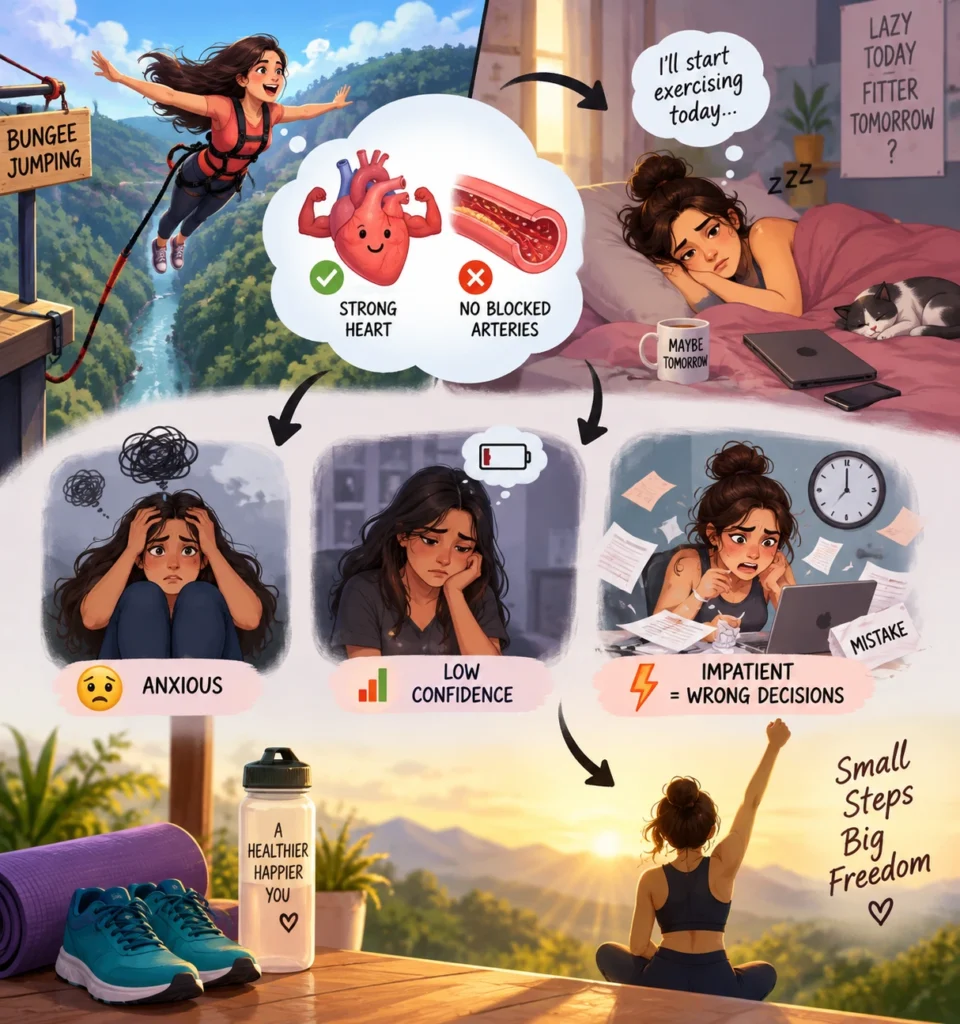
We are getting slow , lazy, tired ,feeling less energy , but while lying down -we still wanna hike , run , being more enrgetic like before. Sometimes I feel like I want to go bungee jumping, but for that, your heart should be strong, right? Your arteries should not be blocked either. So what should we do ?We don’t feel like exercising. We think every day that we will start today, but because of laziness, we keep lying on the bed.
Because of this, we feel anxious, our confidence goes down, and we feel depressed if some work is delayed or not completed.We just cannot be patient, and in a hurry, we sometimes end up doing wrong things.
You don’t need an expensive gym membership, complicated equipment, or advanced fitness training to start moving. Sometimes, all you need is a comfortable pair of shoes, 15–20 minutes, and the decision to get up and walk.
Or you can go barefoot , When you feet touches the surface i balance the cahrges(+ & -) of your body that really helps in securing your heart .if you know about the benifits of barefoot walking . please let us know . We will write an article on this.
For many people, the hardest part of a fitness journey isn’t knowing what exercise to do. It’s actually starting.
But walking isn’t only about burning calories or reaching a certain number of steps., it gives you an ease in adopting higher level of fitness.
Every walk gives your heart, blood vessels, muscles and brain an opportunity to work together.
Let’s look at how regular walking can support your heart and overall health.
1. Walking Supports a Healthier Heart
Your heart is a muscle that works continuously to circulate blood throughout your body.
When you walk, your muscles need more oxygen and nutrients. In response, your cardiovascular system works harder to deliver what your body needs.
With regular physical activity, your body can gradually become more efficient at handling physical activity. This can improve cardiovascular fitness and support overall heart health.
Brisk walking is particularly useful because it raises your heart rate more than a leisurely stroll while remaining accessible to many people.
You don’t need to start by walking fast.
If you’re currently inactive, simply getting into the habit of walking can be an important first step.
2. Walking Supports Better Blood Circulation
When you walk, your leg muscles repeatedly contract and relax. This movement helps support the circulation of blood through your body.
Better circulation means your working muscles can receive oxygen and nutrients while metabolic waste products are transported away.
But there’s another important reason movement matters for your cardiovascular system.
Your blood vessels are not simply passive tubes. Their inner lining, called the endothelium, plays an important role in regulating blood flow and vascular function.
Regular physical activity can support healthy endothelial function.
In simple terms, regular movement gives your blood vessels a reason to stay responsive and functional.
That is one reason walking can be much more than simply “getting your steps in.”
3. Walking Can Help Support Healthy Blood Pressure
Your heart and blood vessels work together to maintain blood pressure.
When blood pressure remains high for a long period, it can place additional stress on the cardiovascular system.
Regular physical activity such as brisk walking can contribute to healthier blood pressure levels.
The American Heart Association recommends regular physical activity as part of a heart-healthy lifestyle, and walking is one of the easiest ways to add more activity to your day.
You also don’t have to complete one long workout.
A few shorter walks throughout the day can help you accumulate more physical activity.
The important thing is to start where you are and gradually build from there.
4. Walking Can Support Healthy Cholesterol and Metabolic Health
Cholesterol is essential for the body, but an unhealthy cholesterol profile can increase cardiovascular risk.
Walking alone isn’t a replacement for a balanced diet, medication when prescribed, or other medical treatment. However, regular physical activity can be an important part of a heart-healthy lifestyle that is why most of the times doctors advises walking to the patient.
Walking can also support overall metabolic health.
When you move regularly, your muscles use energy and glucose. Over time, maintaining regular physical activity can contribute to healthier blood sugar regulation and a lower risk of metabolic problems.
This matters because blood pressure, cholesterol, blood sugar and body weight are all connected to long-term cardiovascular health.
In other words, walking doesn’t have to “fix” one single problem to benefit your heart.
It can become part of a lifestyle that improves several important risk factors at the same time.
5. Walking Helps With Healthy Weight Management
Excess body weight can increase the workload placed on your cardiovascular system and is associated with several heart-health risk factors.
Walking increases your daily energy expenditure and can therefore contribute to healthy weight management.
How many calories you burn depends on several factors, including your body weight, walking speed, distance and terrain.
But there’s an important point that is often overlooked:
You don’t have to burn hundreds of calories in one workout for walking to be useful.
A 15-minute walk today is still movement.
Another 15-minute walk tomorrow is another positive step.
Over weeks and months, those small actions can become a meaningful increase in your overall physical activity.
Walking can also be easier to maintain than exercise routines that feel overwhelming.
And when an activity is easier to maintain, you’re more likely to keep doing it.
6. Walking Builds Stamina and Cardiovascular Fitness
If you haven’t exercised for a long time, even a short walk can initially feel tiring.
That’s completely normal.
Your body needs time to adapt.
As you walk consistently, you may gradually find that the same distance feels easier. You may be able to walk for longer, walk faster, or recover more comfortably after physical activity.
This is where walking can become the foundation of your fitness journey.
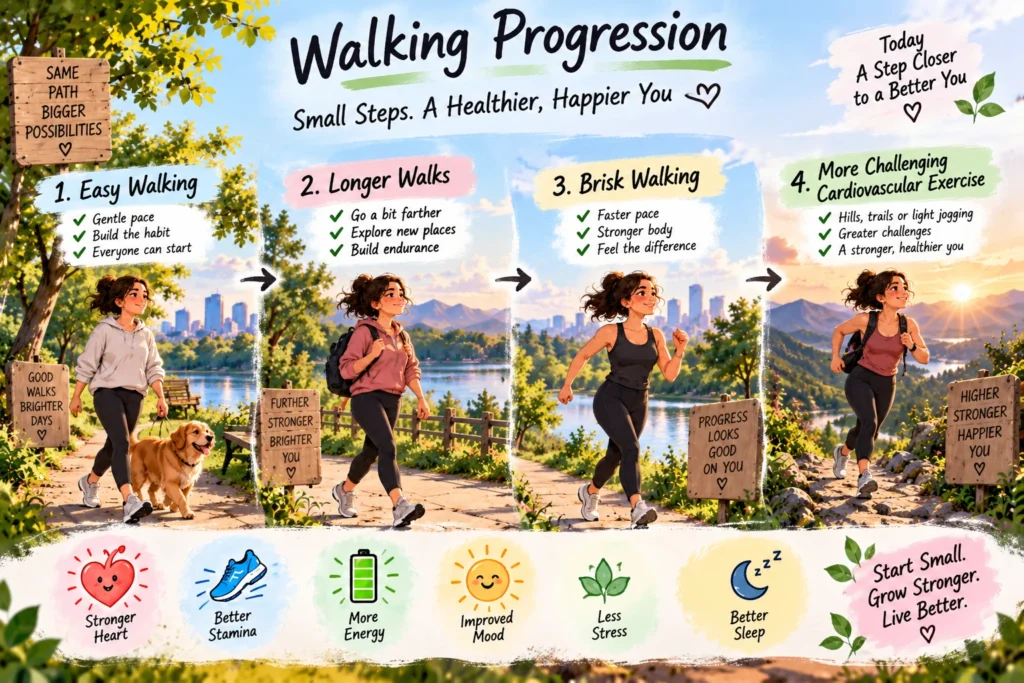
You can start with:
Easy walking → longer walks → brisk walking → more challenging cardiovascular exercise
There is no need to rush the process.
Fitness is built through gradual progression and consistency, not through trying to do everything on the first day.
7. Walking Can Help Clear Your Mind and Reduce Stress
The benefits of walking aren’t limited to your heart and muscles.
Your brain benefits from movement too.
Sometimes anxiety and overthinking become worse when we spend long periods sitting, lying down, scrolling through our phones, or repeatedly thinking about the same problems.
Walking gives your mind a positive change of activity.
Instead of remaining physically still while your thoughts keep running, you begin moving your body and changing your environment.
A short outdoor walk can provide a mental break from work, screens and repetitive thoughts.
Physical activity is also associated with better mental well-being, and regular activity can help reduce symptoms of anxiety and depression in many people.
Walking doesn’t magically eliminate every problem.
But it can give you something extremely valuable:
space to breathe, move, think and reset.
For someone who struggles with overthinking, a walk can turn restless energy into productive energy.
8. Walking Can Improve Your Mood and Make You Feel More Energetic
It may sound strange that using energy through exercise can eventually make you feel more energetic.
But regular physical activity can improve your physical fitness and overall sense of well-being.
Walking also influences biological systems involved in mood and stress regulation.
This is why you may sometimes finish a walk feeling mentally lighter, calmer or more refreshed than when you started.
Instead of spending your energy lying down, scrolling or worrying, you can use some of that energy for movement.
Your body gets active.
Your mind gets a change of environment.
And you may return with greater clarity and motivation to continue with your day.
That small psychological shift can be extremely important when you’re trying to build a healthier lifestyle.
9. Walking Supports Stronger Muscles, Bones and Mobility
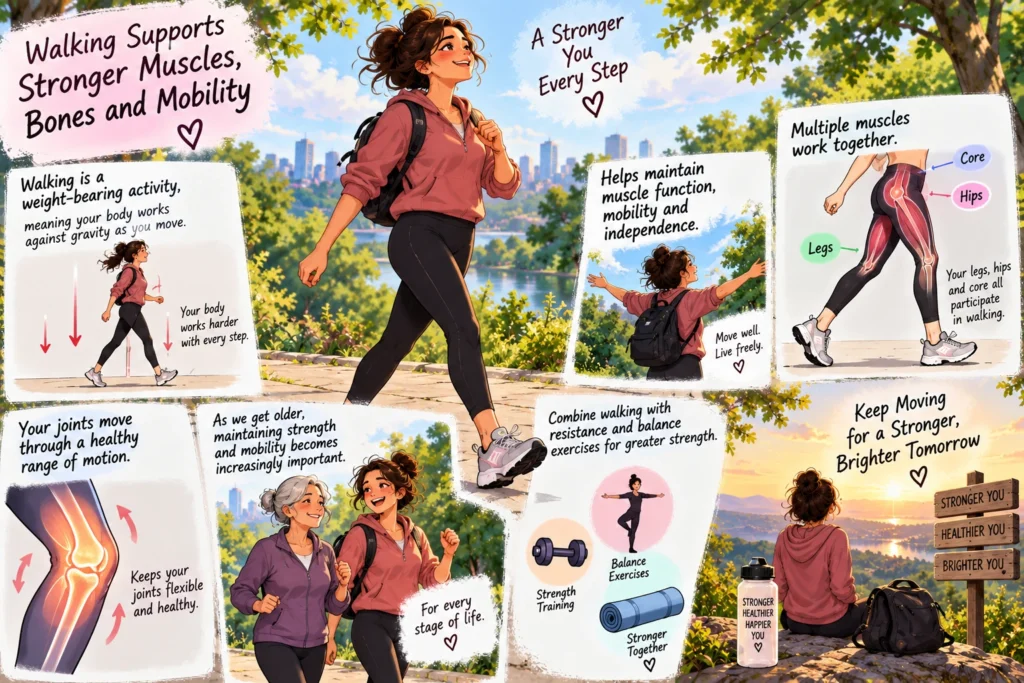
Walking is a weight-bearing activity, meaning your body works against gravity as you move.
Regular walking can help maintain muscle function, mobility and physical independence.
Your legs, hips and core all participate in walking, while your joints move through a regular range of motion.
As we get older, maintaining strength and mobility becomes increasingly important.
Walking is therefore not simply an exercise for younger or highly fit people.
It can be a practical way to keep your body moving throughout different stages of life.
For greater strength, however, walking can be combined with appropriate resistance and balance exercises.
10. Walking Helps You Build a Fitness Habit You Can Actually Maintain
This may be the most important benefit of all.
A fitness plan is only useful if you can continue doing it.
Many people start their fitness journey with unrealistic expectations.
They decide they will wake up early every morning, run several kilometres, spend an hour in the gym and completely change their lifestyle overnight.
Then, after a few difficult days, the routine disappears.
Walking offers a different approach.
You can start small.
15 minutes.
That’s it.
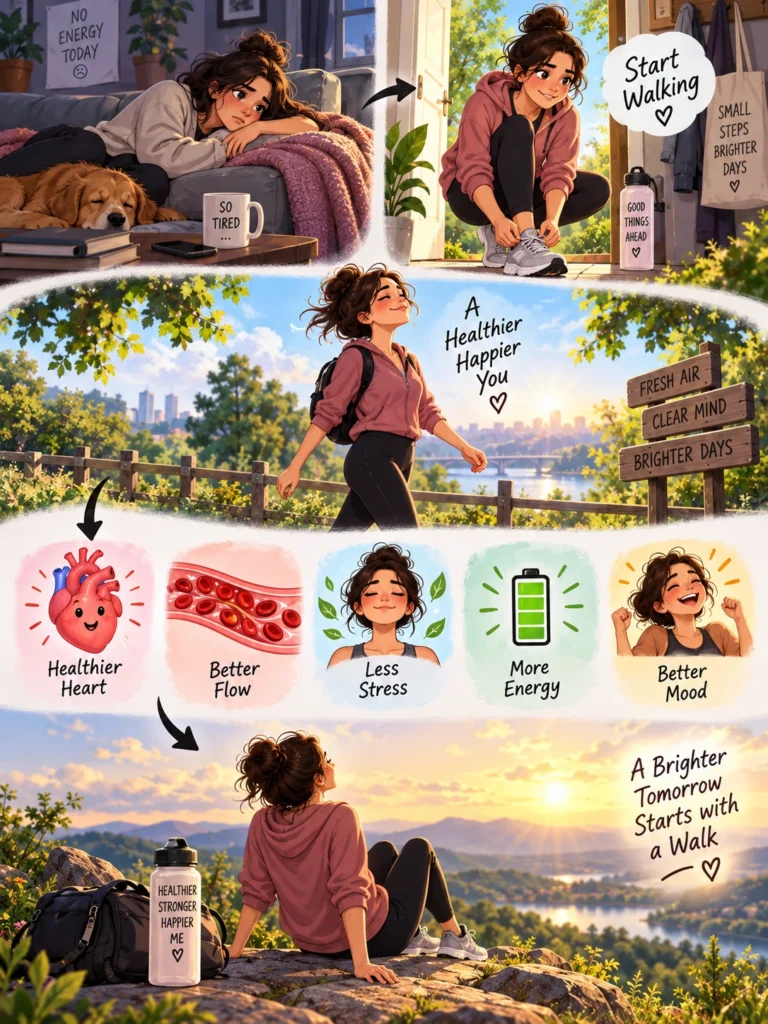
Put on your shoes, go outside and walk.
You don’t need to be extremely motivated.
You don’t need to feel perfectly energetic.
You simply need to start.
Once walking becomes a habit, you can gradually increase your duration and pace.
You can move from an easy walk to a brisk walk.
Then, as your fitness improves, you can introduce other forms of cardiovascular exercise, strength training and mobility work.
This creates something much more valuable than a short burst of motivation:
momentum.
Walking May Be the Best Place to Start Your Fitness Journey
You don’t have to become fit before you start exercising.
Walking can be the way you become fitter.
If you have been inactive for a long time and the idea of intense exercise feels overwhelming, don’t think about running five kilometres or spending an hour in the gym.
Think about walking for 15 minutes.
Your first goal isn’t to become an athlete.
Your first goal is simply to activate your body.
Once you start moving regularly, your confidence can grow along with your fitness.
One day, 15 minutes may become 20.
Then 30.
Your comfortable walk may become a brisk walk.
Your stamina may improve.
And eventually, you may feel ready to explore other forms of exercise.
That’s how a fitness journey can begin—not with perfection, but with one simple decision to move.
How Much Should You Walk?
There is no single perfect number of steps that everyone must achieve.
The American Heart Association recommends at least 150 minutes of moderate-intensity aerobic activity per week for most adults, and brisk walking can be one way to work toward that goal.
If you’re currently inactive, don’t feel pressured to reach that target immediately.
Start with an amount that feels manageable.
For example:
- Start with 10–20 minutes of comfortable walking.
- Gradually increase the duration.
- When comfortable, introduce periods of brisk walking.
- Slowly work toward regular weekly physical activity.
- Add strength, mobility and other exercises as your fitness improves.
The goal is progress, not punishment.
What Is Brisk Walking?
Brisk walking means walking faster than your normal leisurely pace.
One simple way to judge intensity is the talk test.
During moderate-intensity activity, you should generally be able to talk, but you may find it difficult to sing comfortably.
You don’t need to walk at maximum speed.
The goal is to challenge your cardiovascular system while maintaining a pace you can sustain safely and consistently.
Simple Ways to Walk More Every Day
You don’t always need to schedule a formal workout.
You can increase your daily movement by:
- Taking a short walk after lunch or dinner
- Walking during phone calls
- Taking movement breaks during work
- Walking to nearby destinations when practical
- Using stairs when appropriate
- Taking an evening walk with family or friends
- Going for a short outdoor walk when you feel mentally overwhelmed
These small decisions can gradually increase your total daily activity.
Walking and Heart Health: The Bigger Picture
Walking should not be viewed as a magic cure for heart disease.
Your heart health depends on many factors, including your diet, blood pressure, cholesterol, blood sugar, body weight, sleep, stress, genetics and other lifestyle factors.
But walking can influence several of these areas indirectly by helping you become more physically active and supporting a healthier lifestyle.
The real power of walking is therefore not just in the number of calories you burn or the number displayed on your smartwatch.
It’s in what walking can help you build:
better fitness, better habits, better mobility, better mental well-being and a more active lifestyle.
And all of these can contribute to a healthier cardiovascular system.
Walking Safety Tips
For most people, walking is a relatively accessible form of physical activity, but you should still listen to your body.
Wear comfortable footwear, choose a safe walking environment and increase your walking duration and intensity gradually.
If you have a known cardiovascular condition, significant medical problems, recent surgery, severe joint problems or unexplained symptoms, speak with your healthcare professional about what level of activity is appropriate for you.
Stop exercising and seek medical attention if you develop concerning symptoms such as severe chest pain, fainting or unusual difficulty breathing.
So, One Walk Can Be the Beginning
Walking may look simple.
But sometimes, simple is exactly what we need.
You don’t need perfect motivation.
You don’t need expensive equipment.
You don’t need to wait until Monday.
And you don’t need to become fit before you start moving.
Start with a walk.
That first 15–20 minutes can be the beginning of a healthier routine. With consistency, your walk can become a brisk walk. Your stamina can improve. Your confidence can grow. And eventually, you may find yourself ready for a much bigger fitness journey.
Walking supports your heart, circulation, metabolic health, muscles, mobility and mental well-being.
But perhaps its greatest benefit is this:
It gets you moving.
And sometimes, one small step is all it takes to begin building a healthier heart and a healthier future.