
What Are Heart Blockages and Can Lifestyle Changes Help?
Heart blockages are not simply “dirt” sitting inside the arteries that can be washed away. They usually develop through atherosclerosis, a process in which plaque made from cholesterol, fat, calcium, inflammatory material, and other substances builds up within the artery walls.
The coronary arteries supply oxygen-rich blood to the heart muscle. As plaque gradually builds up, these arteries can become narrower and less flexible. As a result, the heart may receive less blood and oxygen, especially during physicl activity or stress. Sometimes, a plaque can rupture and trigger a blood clot, which may suddenly reduce or completely stop blood flow and cause a heart attack.
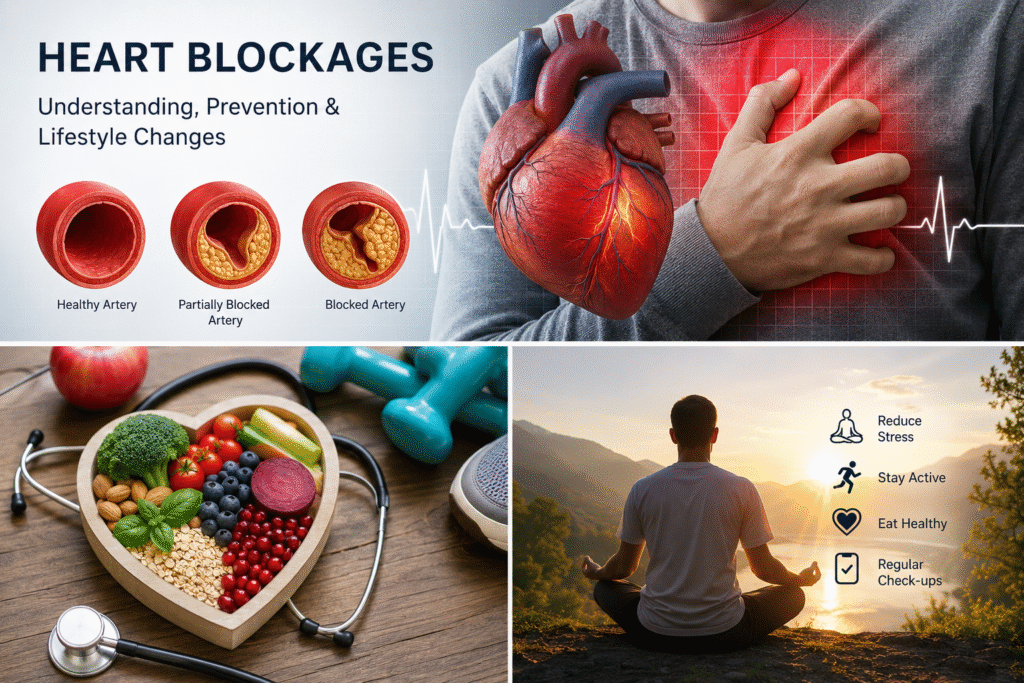
What Causes Coronary Artery Blockages?
There is usually no single cause. Coronary artery disease develops through a combination of lifestyle, medical, and inherited risk factors.
Important risk factors include:
- High LDL cholesterol and unhealthy blood-fat levels
- High blood pressure
- Diabetes or poorly controlled blood sugar
- Smoking or tobacco use
- Physical inactivity
- Excess body weight
- Diets high in saturated fat, trans fat, salt, and heavily processed foods
- Poor sleep
- Long-term unmanaged stress
- Increasing age
- Family history and genetic risk
Some factors, such as age and family history, cannot be changed. However, many others can be managed through appropriate treatment and healthier daily habits.
Can Medicines or Lifestyle Changes Remove Heart Blockages?
This question needs a careful and honest answer.
Prescribed medicines and lifestyle changes can help lower cholesterol, control blood pressure and blood sugar, reduce clotting risk, stabilise existing plaque, relieve symptoms, and slow further progression of coronary artery disease. In some patients, intensive cholesterol reduction and comprehensive lifestyle intervention may also support modest plaque regression. However, no treatment can guarantee that every blockage will completely disappear.
Therefore, it would be incorrect to say that medicines have no role in improving artery health. Cholesterol-lowering medicines, including statins and other therapies, are often a major part of treatment because they reduce LDL cholesterol and future cardiovascular risk. Medicines should never be stopped, reduced, or replaced without a doctor’s advice.
Lifestyle changes also have a strong impact. Healthy eating, appropriate physical activity, tobacco avoidance, better sleep, weight management, stress control, and regular medical follow-up work together to support the heart and reduce future risk.
When a blockage is severe or blood flow is dangerously reduced, a doctor may recommend angioplasty and stent placement to open the narrowed artery. In other situations, bypass surgery may be used to create a new route for blood to flow around the blockage.
What Did Dr. Dean Ornish’s Research Show?
I am currently reading Dr. Dean Ornish’s work on heart-disease reversal. His research explored an intensive lifestyle programme involving a very low-fat plant-based diet, physical activity, stress management, and social support.
In a small randomised clinical trial, participants following intensive lifestyle changes showed some regression of coronary atherosclerosis after one year, and the researchers reported that these changes could be maintained for several years. However, this was an intensive, structured programme—not simply one food, yoga pose, or home remedy. Its results should not be treated as a guarantee for every patient.
This research is encouraging because it shows that lifestyle can be a serious part of cardiac care. At the same time, it should be followed under professional medical guidance, particularly by people with diagnosed heart disease, previous heart attack, chest pain, stents, diabetes, or blood-pressure problems.
Two Things Every Heart Patient Should Understand
1. Your Diet Must Be Suitable for You
There is no single diet that is perfect for everyone.
A suitable eating plan depends on your diagnosis, medicines, blood pressure, blood sugar, cholesterol levels, weight, kidney function, cultural food habits, and nutritional needs.
In general, heart-healthy eating gives greater importance to:
- Vegetables and fruits
- Whole grains
- Beans and lentils
- Nuts and seeds in appropriate portions
- Minimally processed foods
- Appropriate protein sources
- Less saturated fat, trans fat, excess salt, added sugar, and heavily processed food
“Boiled food only” is not automatically necessary or nutritionally complete. Food can also be steamed, grilled, roasted, sautéed with limited oil, or prepared using other heart-conscious cooking methods. A qualified doctor or dietitian can help create a plan that is safe, realistic, and sustainable.
2. Exercise Must Be Suitable for You
Exercise is valuable, but its intensity must match your medical condition.
For one person, brisk walking may be appropriate. Another person may first need slow walking, supervised cardiac rehabilitation, mobility work, or additional medical testing. Exercise should not be copied blindly from another patient, influencer, or online video.
The safest approach is to ask your doctor:
- How long should I walk?
- What intensity is safe?
- What heart rate or symptoms should I monitor?
- Can I do strength training?
- Should I join cardiac rehabilitation?
- Which warning signs mean I should stop?
Yoga, breathing practices, stretching, and meditation may help with flexibility, stress management, and emotional well-being. However, they should be viewed as supportive practices—not as guaranteed methods for “cleaning” coronary arteries. People with heart disease should select safe practices with professional guidance.
What I Am Learning From Lifestyle Change
While reading about heart health and improving my own routine, I have started understanding why lifestyle change is not merely a temporary diet plan.
It affects how we eat, sleep, move, manage stress, think about our health, and respond to warning signs.
Personally, I have been trying to make simpler food choices and include light activities such as walking, stretching, and meditation. These changes have helped me feel more disciplined and confident.
However, my personal experience is not proof that a blockage has reduced. Only proper medical evaluation and appropriate tests can show what is happening inside the coronary arteries.
This distinction is important:
Feeling better is encouraging, but it is not a replacement for medical follow-up.
The Most Important Step: Work With Your Doctor
The most important decision I have made is to stay connected with a qualified doctor.
Every person has a different level and location of blockage, different symptoms, different heart function, and different associated risks. Therefore, treatment cannot be the same for everyone.
A doctor may recommend:
- Cholesterol-lowering medicines
- Blood-pressure or diabetes treatment
- Antiplatelet medicines
- Lifestyle modification
- Cardiac rehabilitation
- Further testing
- Angioplasty or bypass surgery when required
The correct plan depends on the individual—not only on the percentage written in a report.
Heart blockages can happen, just as unexpected challenges can arise in life.. Like every difficult challenge, it needs to be understood, faced, and managed with patience, discipline, proper treatment, and the right support.
Still, there is real reason for hope.
With prescribed treatment, healthier food choices, safe physical activity, better sleep, stress management, tobacco avoidance, regular check-ups, and consistent effort, many risk factors can be controlled and the chances of future complications can be reduced.
Lifestyle change is not a quick cure. It is a long-term commitment to protecting your heart and your whole life..
We need to believe that I will get better a version of myself now and with that believe, need to work daily on our better version.
All the best. GET YOUR HEART BACK
I loved as much as you will receive carried out right here. The sketch is attractive, your authored subject matter stylish. nonetheless, you command get bought an shakiness over that you wish be delivering the following. unwell unquestionably come further formerly again as exactly the same nearly very often inside case you shield this hike.