
Introduction
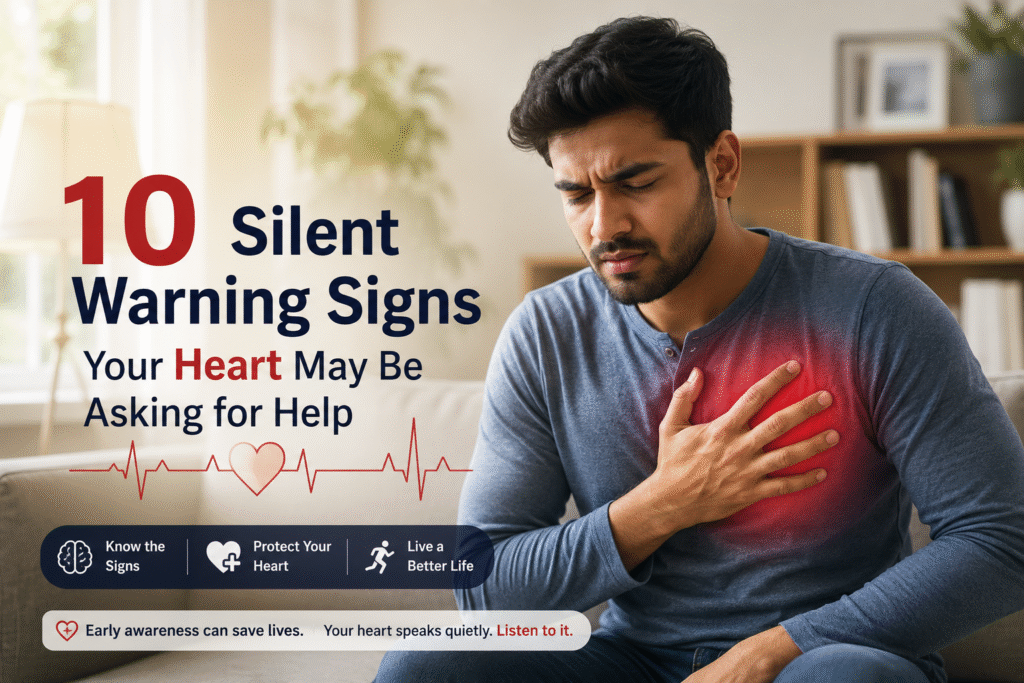
Heart disease doesn’t always begin with severe chest pain. Sometimes the body gives subtle warning signs weeks or months earlier.When I was 28 years old, I never imagined I could have a heart attack.
Like many young people, I believed heart disease happened only to older adults. I thought the tiredness, stress, poor sleep, and chest discomfort I was experiencing were simply the result of work pressure, an unhealthy routine, and everyday life.
Looking back today, I realize my body had been giving me warning signs for months—but I didn’t recognize them.
This article is based on both my personal experience and general heart health awareness. While these symptoms do not always mean heart disease, they are signs that deserve attention and should never be ignored.
Sign #1 – Unusual Fatigue
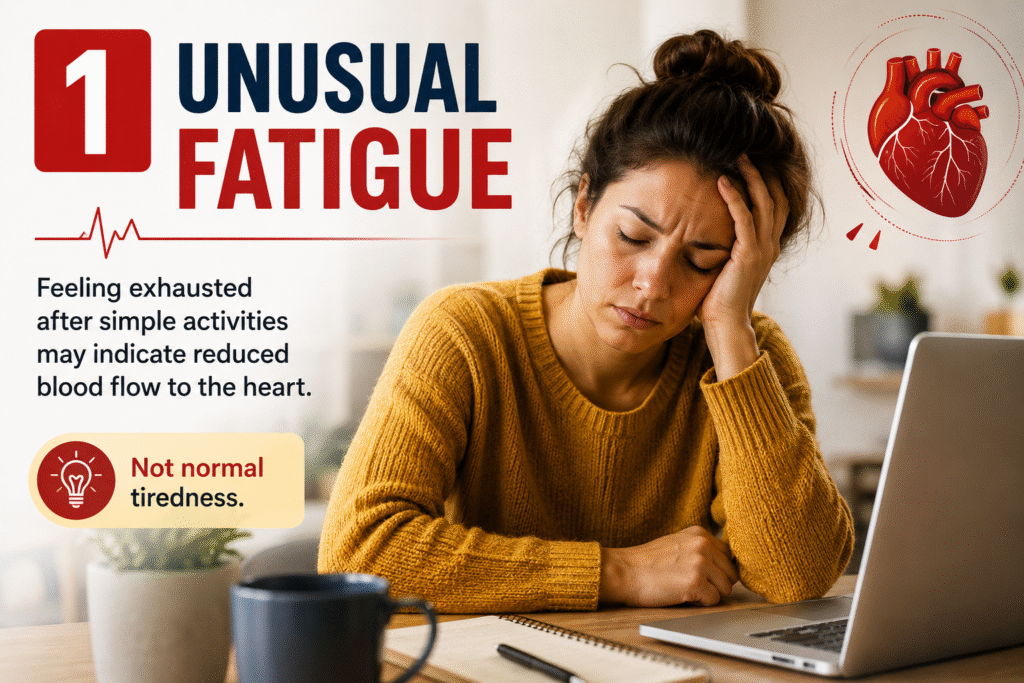
Before my heart attack, the biggest change I noticed was an unusual kind of tiredness.
This wasn’t the normal fatigue you feel after going to the gym, playing football, or working hard. It felt different. It was a heavy, draining exhaustion that made even small activities feel difficult.
I often found myself sitting still because I simply didn’t have the energy to move around.
At the time, I blamed work stress, poor diet, and long working hours. I never imagined it could be related to my heart.
In some people, reduced blood flow caused by heart problems may reduce the amount of oxygen reaching the body’s tissues, which can contribute to unusual fatigue.
If you notice persistent fatigue that feels unusual and doesn’t improve with rest, it’s worth discussing it with a healthcare professional.
Feeling exhausted after simple activities may indicate reduced blood flow.
Sign #2 – Shortness of Breath
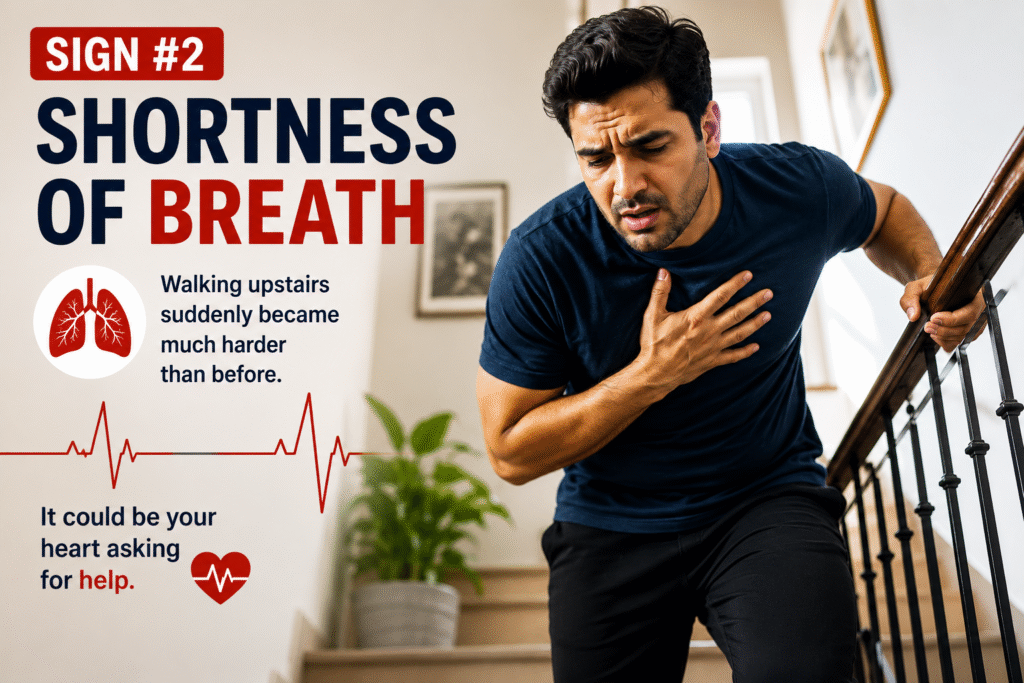
Walking upstairs suddenly became much harder than before.
I remember wondering why I was getting so breathless after doing such small activities.
Because I had smoked in the past, I assumed my lungs were the problem. I kept telling myself that everything would improve once I completely quit smoking.
Looking back, I realized it wasn’t something I should have ignored.
Shortness of breath can have many causes, including lung conditions, but it can also be associated with heart problems. If it appears suddenly or gradually becomes worse, it’s important to seek medical advice.
Sign #3 – Chest Discomfort
Before my heart attack, I often felt pressure and tightness in my chest. Sometimes it felt heavy, with a mild burning sensation, and taking a deep breath wasn’t always comfortable.
At the time, I ignored it because it wasn’t the severe chest pain people usually associate with a heart attack.
Looking back, I learned that angina can cause chest discomfort such as pressure, tightness, heaviness, burning, or squeezing when the heart doesn’t receive enough oxygen-rich blood. However, these symptoms can also have other causes, so it’s important to get them checked by a healthcare professional.
After improving my sleep, diet, exercise, managing stress, and quitting unhealthy habits, these symptoms reduced significantly. Lifestyle changes helped me, but they should never replace proper medical care.
Learn more: American Heart Association – Angina (Chest Pain)
Sign #4 – Pain in Other Areas
Pain can spread to
-
- Left arm
-
- Both arms
-
- Jaw
-
- Neck
-
- Back
-
- Shoulder
One of the symptoms I personally experienced was pain in my left arm.
It wasn’t unbearable pain, but it was persistent and uncomfortable. I found myself repeatedly shaking my arm because I felt something wasn’t right.
I also experienced discomfort in my shoulder, neck, jaw, and upper back.
During my heart attack, even my jaw began trembling, which was unlike anything I had ever experienced before.
Pain can occur in one or both arms.
- Shoulder
Sign #5 – Dizziness
Before my heart attack, I sometimes experienced dizziness for no obvious reason. Occasionally, even while sitting quietly, I would suddenly feel light-headed, as if I was about to faint. The sensation lasted only a few seconds before I felt normal again, so I ignored it.
Dizziness or feeling faint can have many causes, including heart-related conditions such as abnormal heart rhythms or reduced blood flow to the brain, but it can also occur for non-heart-related reasons. If it happens repeatedly or is accompanied by chest discomfort, shortness of breath, or palpitations, it’s important to seek medical advice.
After improving my lifestyle and following medical treatment, I experienced these episodes much less frequently.

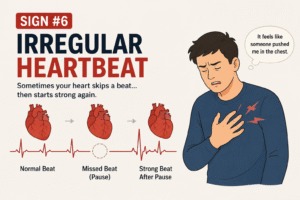
Sign #6 – Irregular Heartbeat
Occasional skipped beats can happen, but persistent palpitations should be discussed with a doctor.
Before my heart attack, I occasionally felt my heartbeat suddenly pause for a moment before starting again with a stronger beat.
The sensation felt as though someone had suddenly pushed me in the chest.
It lasted only a few seconds, but it was strange enough to make me stop what I was doing.
At first it happened occasionally, then I gradually became used to it and stopped paying attention. Now it is fine , with the help of medicines & with good lifestyle.
8. Sign #7 – Swollen Feet
Fluid retention may suggest the heart isn’t pumping efficiently. I have not experienced it personally but it indicates that there is absence of proper blood flow in body.
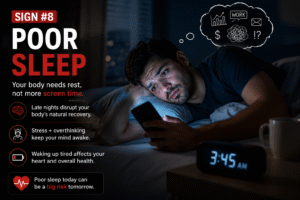
Sign #8 – Poor Sleep
Sleep and heart health are closely connected.
After long days at work, I used to come home late, eat dinner late, and stay awake for hours scrolling through reels or watching movies to distract myself from work stress. Before I knew it, I was sleeping around 3 or 4 a.m. and waking up just a few hours later to get ready for work again.
Looking back, I realized I wasn’t giving my body the time it needed to recover. Instead of resting, I was keeping my mind under constant stress.
Poor sleep doesn’t just leave you feeling tired—it can affect your heart health over time. If poor sleep becomes a regular habit, it’s important to make changes and seek medical advice if you’re concerned.
Sign #9 – Cold Sweats
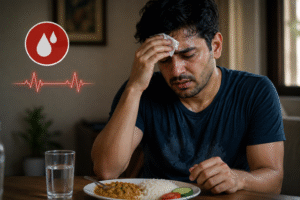
Unexpected sweating without exercise or heat can sometimes accompany serious heart conditions.
People often asked me why I was sweating so much.
Even while eating meals, I sometimes noticed excessive sweating without any obvious reason.
At the time, I never connected it with my heart.
Excessive sweating can happen for many reasons, but when it occurs alongside symptoms such as chest discomfort or shortness of breath, it should never be ignored.
Sign #10 – Persistent Stress
Stress has become an unavoidable part of today’s fast-paced life. Whether it’s work pressure, relationships, financial issues, health concerns, or personal problems, stress affects almost everyone.
Long-term stress can affect blood pressure, sleep, eating habits, and heart health.

Stress alone doesn’t always cause a heart attack, but over time it can contribute to unhealthy habits and increase cardiovascular risk.
At the end , I’d like to mention- thatthese are the common signs of bad heart conditions.
I am not a doctor.
I am someone who experienced a heart attack at the age of 28 and later realized that my body had been giving me warning signs for months.
My goal in sharing this story is simple: if even one person recognizes these symptoms earlier and seeks medical help sooner, then sharing my experience has been worthwhile.
When Should You Seek Emergency Care?
Call your local emergency services immediately if you experience symptoms such as:
-
- Severe chest pain
-
- Difficulty breathing
-
- Fainting
-
- Chest discomfort that spreads to the arm or jaw
-
- Sudden severe symptoms
Prevention Tips
-
- Walk regularly
-
- Eat more fruits and vegetables
-
- Sleep 7–9 hours
-
- Avoid smoking
-
- Limit alcohol if you drink
-
- Monitor blood pressure
-
- Get regular health checkups
Conclusion
Your heart often gives small signals before serious problems develop. Paying attention to these warning signs and seeking timely medical advice can make a significant difference.