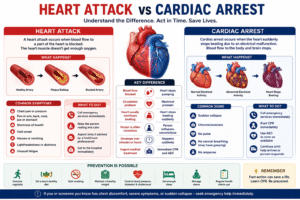
Many people use the terms heart attack and cardiac arrest interchangeably. Although both are serious medical emergencies, they are not the same condition.
A heart attack happens when blood flow to part of the heart is blocked. Cardiac arrest occurs when the heart suddenly stops beating due to an electrical malfunction.
Knowing the difference can help you recognize the warning signs quickly and take the right action. In an emergency, those few minutes can save a life.
What Is a Heart Attack?
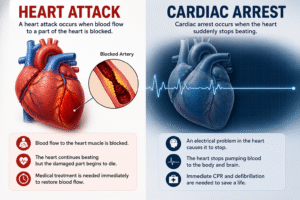
A heart attack, also known as myocardial infarction, occurs when one or more coronary arteries become blocked.
Without enough oxygen-rich blood, part of the heart muscle begins to die.
The blockage is usually caused by a buildup of fatty deposits (plaque) that rupture and form a blood clot.
Common Causes
-
- Coronary artery disease
-
- High cholesterol
-
- High blood pressure
-
- Smoking
-
- Diabetes
-
- Obesity
-
- Lack of physical activity
-
- Stress
-
- Family history
What Is Cardiac Arrest?
A cardiac arrest occurs when the heart suddenly stops pumping blood due to an abnormal electrical rhythm.
When this happens:
-
- The brain stops receiving oxygen.
-
- The person collapses.
-
- Breathing stops or becomes abnormal.
-
- There is no pulse.
Without immediate CPR and defibrillation, cardiac arrest can become fatal within minutes.
Heart Attack vs Cardiac Arrest: Key Differences
Heart Attack
-
- A circulation problem
-
- Caused by blocked blood flow
-
- Heart usually continues beating
-
- Person is often conscious
-
- Chest pain is common
Cardiac Arrest
-
- An electrical problem
-
- Heart suddenly stops pumping
-
- Person collapses immediately
-
- No pulse
-
- No normal breathing
Symptoms of a Heart Attack
Heart attack symptoms may appear gradually or suddenly.
Common warning signs include:
-
- Chest pain or pressure
-
- Pain spreading to the left arm, shoulder, jaw, neck, or back
-
- Shortness of breath
-
- Cold sweats
-
- Nausea or vomiting
-
- Dizziness
-
- Unusual fatigue
Some people, especially women, older adults, and people with diabetes, may experience less typical symptoms.
Symptoms of Cardiac Arrest
Cardiac arrest usually happens without warning.
Symptoms include:
-
- Sudden collapse
-
- Loss of consciousness
-
- No pulse
-
- No normal breathing or only gasping
-
- No response when spoken to or touched
This requires immediate emergency action.
Can a Heart Attack Cause Cardiac Arrest?
Yes.
A severe heart attack can damage the heart muscle and trigger dangerous abnormal heart rhythms (arrhythmias). These rhythms can sometimes lead to sudden cardiac arrest.
However, not every heart attack leads to cardiac arrest, and not every cardiac arrest is caused by a heart attack.
What Should You Do During a Heart Attack?
If you think someone is having a heart attack:
-
- Call your local emergency medical services immediately.
-
- Help the person sit and stay calm.
-
- Loosen tight clothing.
-
- If advised by a healthcare professional and there is no allergy or contraindication, chewing an aspirin may help while waiting for emergency care.
-
- Do not delay seeking medical attention.
What Should You Do During Cardiac Arrest?
Cardiac arrest is a life-threatening emergency.
-
- Call emergency medical services immediately.
-
- Begin CPR if you are trained, or follow dispatcher instructions.
-
- Use an Automated External Defibrillator (AED) as soon as one is available.
-
- Continue CPR until emergency responders arrive or the person starts showing signs of life.
Can Heart Attacks Be Prevented?
Many heart attacks can be prevented by maintaining a healthy lifestyle.
-
- Eat a heart-healthy diet.
-
- Exercise regularly.
-
- Avoid smoking.
-
- Limit alcohol.
-
- Control blood pressure, cholesterol, and diabetes.
-
- Maintain a healthy weight.
-
- Get enough sleep.
- Have regular medical check-ups.